
Veterinary Surgery for Dogs, Cats, and Exotic Pets in Valparaiso, IN
Request an Appointment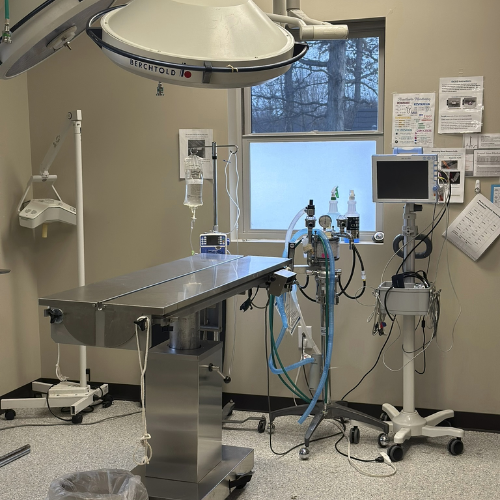
At Arbor View Animal Hospital, we provide veterinary surgery for dogs, cats, and exotic pets in Valparaiso, Indiana. From routine procedures to more complex conditions, our team uses advanced diagnostics and careful anesthetic monitoring to evaluate, diagnose, and treat surgical problems. Many surgical conditions can be managed in-house, which may reduce the need for referral to outside specialty hospitals.
Our goal is to provide safe, effective surgical care while keeping pets comfortable throughout the entire process.
Surgical Procedures We Commonly Perform (this list is not all inclusive):
- Spay and neuter procedures
- Mass or tumor removal surgery
- Foreign body surgery (intestinal obstruction)
- Bladder stone removal surgery
- Wound repair and laceration treatment
- Teeth cleaning (dental cleaning) and tooth extractions
- Eye procedures (ex. cherry eye repair, enucleation/eye removal, eyelid mass removal, ectropion/entropion surgeries)
- Soft tissue surgery
- Limb Amputations
- Tissue biopsies
- Dystocia
When Might My Pet Need Surgery?
Surgery may be recommended for a variety of conditions, including:
- Lumps or masses
- Persistent vomiting or suspected foreign body ingestion
- Difficulty urinating or bladder stones
- Non-healing wounds or injuries
- Dental disease requiring tooth extraction
Advanced Diagnostics Before Surgery
Before surgery, accurate diagnosis is critical. We use advanced diagnostic tools when needed, including:
- CT imaging
- Ultrasound
- Digital radiographs
- Laboratory testing
These tools allow us to better understand your pet’s condition and plan our anesthesia and surgery appropriately.
Our hospital provides advanced diagnostic and surgical care in one location, which may reduce the need for referral to outside specialty centers.
Surgical Safety, Monitoring, and Patient Care
At Arbor View Animal Hospital, we place a strong emphasis on patient safety and comfort throughout every stage of the surgical process.
We are accredited by the American Animal Hospital Association, which means we follow rigorous standards for anesthesia, monitoring, and patient care. These standards help ensure that pets receive a high level of care before, during, and after surgery.
Individualized Anesthesia Protocols
No two patients are alike. Anesthetic plans are carefully tailored based on each pet’s species, age, and underlying health conditions. This individualized approach helps reduce anesthetic risk and supports safer outcomes.
We maintain a wide range of medications for pre-medication, induction, and post-operative pain control, allowing us to customize protocols for both traditional and exotic species.
Pre-Anesthetic Preparation & Safety Protocols
Every patient receives a thorough physical examination prior to anesthesia to ensure they are an appropriate candidate for sedation and surgery.
Whenever possible, an intravenous (IV) catheter is placed before anesthesia. This allows us to administer medications efficiently and provides immediate access for life-saving drugs if needed during a procedure.
Induction medications are administered through the IV catheter to allow for a smooth and controlled transition into anesthesia. This approach reduces stress compared to mask induction alone.
All patients receive appropriate pain management for procedures expected to cause discomfort, including medications administered during their visit as well as pain control for recovery at home.
Pain management is an important part of every surgical procedure, and we use medications both during and after surgery to keep patients as comfortable as possible.
Continuous Monitoring During Anesthesia
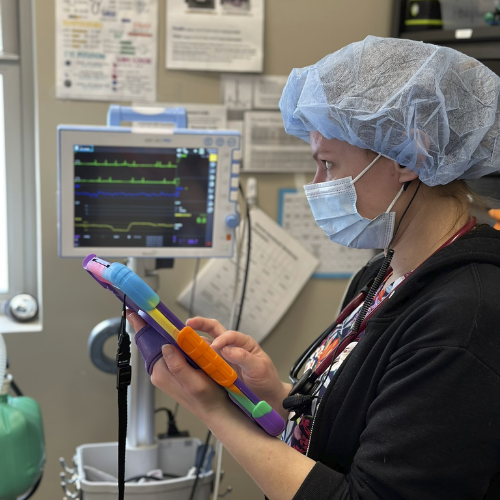
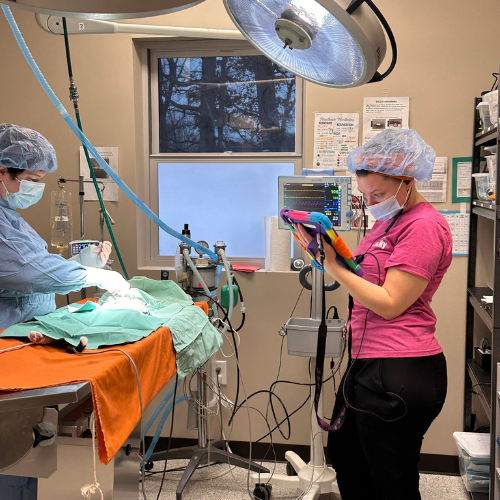
During anesthesia, patients are continuously monitored by a trained team member whose sole responsibility is to oversee anesthesia and patient stability throughout the procedure.
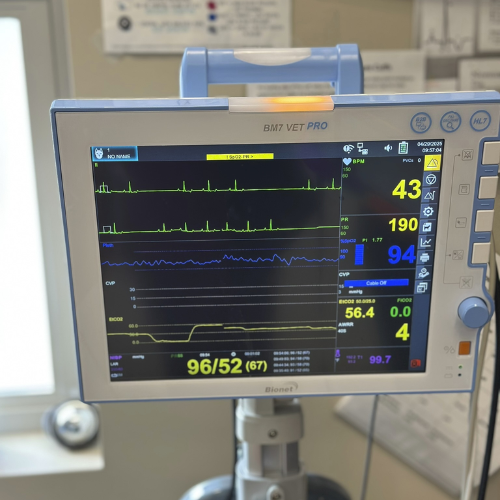
We utilize advanced monitoring equipment to track:
- Heart rate
- Electrocardiogram (EKG)
- Blood pressure
- Oxygen levels (pulse oximetry)
- Carbon dioxide levels (capnography)
- Body temperature
These parameters are monitored continuously because even subtle changes can indicate the need for medical intervention. Our team is trained to identify and respond to these changes proactively to maintain patient stability.
While the veterinarian and surgical team focus on the procedure, a dedicated highly trained team member remains focused solely on anesthesia monitoring to ensure patient safety at all times.
This level of preparation and monitoring allows our team to identify and address changes early, helping to support safer anesthetic outcomes.
Advanced Monitoring & Airway Management
During anesthesia, patients are closely monitored using advanced equipment while trained team members continuously assess vital parameters.
Maintaining control of a patient’s airway is a critical component of safe anesthesia. This can be more challenging in smaller or specialized species and requires both training and specialized equipment.
Our hospital is equipped to manage patients of all sizes, from very small exotic species to larger dogs, using appropriately sized equipment and techniques.
Surgical Suite & Sterile Technique
All procedures are performed in a dedicated surgical suite designed to maintain a sterile environment.
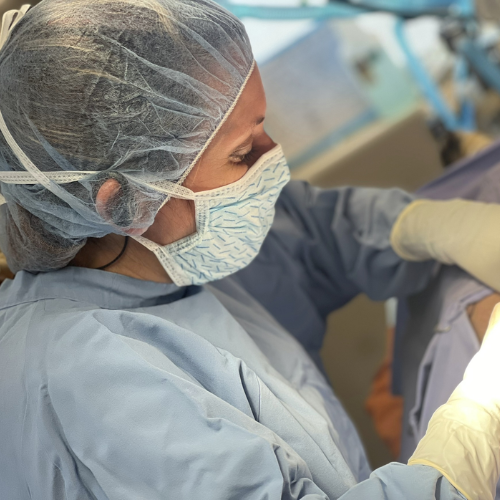
Our surgical team follows strict sterile protocols, including the use of gowns, masks, caps, and sterile gloves. These measures help reduce the risk of post-operative complications such as incision infections.
Specialized Equipment for All Species
We utilize specialized equipment designed for a wide range of patient sizes and species. For example, airway management tools used for small exotic patients differ significantly from those used for dogs and cats.
We also have additional supportive equipment, including a ventilator and incubators, to assist with both surgical procedures and post-operative recovery when needed.
Communication & Post-Operative Care
Following surgery, our veterinarians personally communicate with pet owners to provide updates on how the procedure went, answer questions, and discuss next steps in recovery.
We provide customized discharge instructions for each patient and review them in detail at the time of discharge to help ensure a smooth and comfortable recovery at home.
This level of individualized care, monitoring, and equipment allows us to safely manage a wide range of surgical procedures across many different species.
Surgery for Urgent Conditions
Some conditions require prompt surgical care, including:
- intestinal foreign bodies
- pyometra
- bladder obstruction
- dystocia
- traumatic injuries
When appropriate, our team can evaluate and treat these conditions without referral.
Surgical Care for Exotic Pets
We also perform surgical procedures for a wide range of exotic species, including reptiles, birds, small mammals, aquatic, wildlife and other non-traditional pets.
Exotic patients require specialized anesthesia protocols, equipment, and surgical techniques. Our veterinarians are experienced in providing surgical care tailored to these species.
If your pet has been diagnosed with a condition that may require surgery, or you have concerns about their health, our team can help guide you through the next steps.
Frequently Asked Questions
Is anesthesia safe for my pet?
What should I expect on the day of surgery?
How long does it take for my pet to recover from surgery?
Will my pet need advanced imaging before surgery?
Do you perform emergency surgery?
Do you perform surgery on exotic pets?
Caring medicine for all animals.

Location

Hours
Monday: 8:00am – 8:00pm
Tuesday: 8:00am – 8:00pm
Wednesday: 8:00am – 6:00pm
Thursday: 8:00am – 8:00pm
Friday: 8:00am – 6:00pm
Saturday: 8:00am – 1:00pm
Sunday: Closed

Contact Info
Get in touch!